Welcome to RTKSurvey.com

360-Degree Prism vs Standard Prism: Key Differences for Surveying
A 360-degree surveying prism and a standard circular prism perform the same basic function: reflecting a total station's measurement signal. However, their designs support different field workflows.
For construction surveyors using robotic total stations, the difference can affect tracking, productivity and measurement quality.
The important question is not which prism is more advanced, but which one is better suited to the instrument and the job.
How Is a 360-Degree Prism Different?
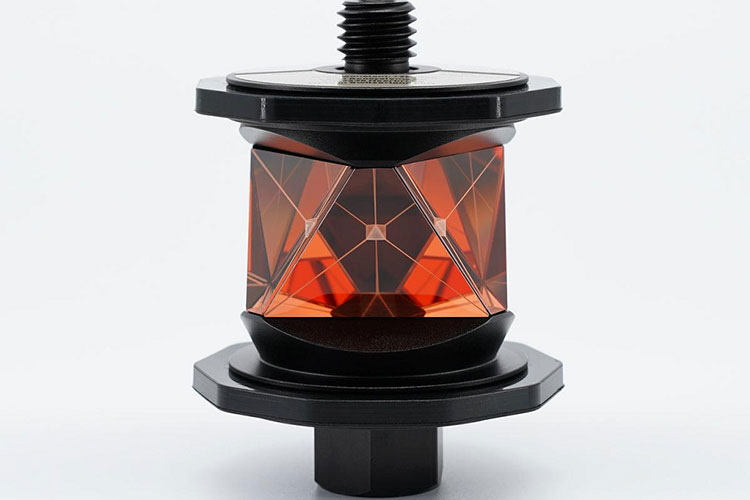
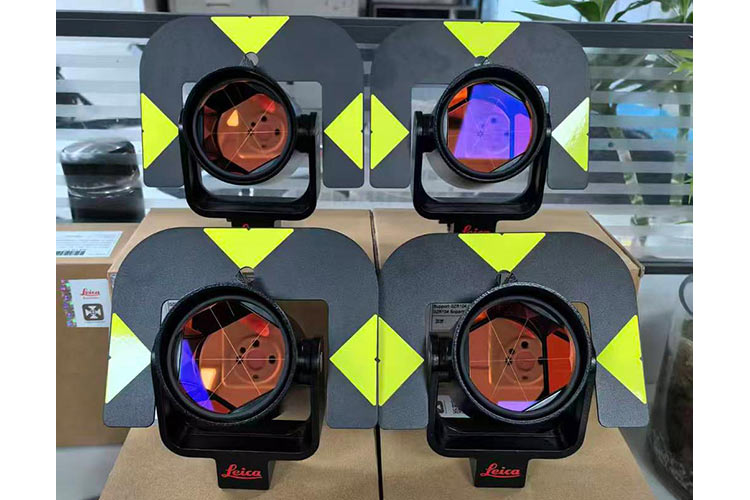
A standard circular prism has a primary reflecting face. The operator generally needs to keep that face oriented toward the total station for reliable measurements.
A 360-degree prism uses multiple reflecting elements arranged around the target. This allows the total station to receive reflected signals from different horizontal directions without the operator constantly turning the prism.
That makes 360-degree prisms particularly useful for robotic surveying, where one person may operate the rover and field controller while the instrument tracks the target automatically.
However, a 360-degree prism does not guarantee uninterrupted tracking. Obstacles, other reflective objects, environmental conditions and instrument compatibility still matter.
360-Degree Prism vs Standard Prism: Comparison
| Feature | 360-Degree Prism | Standard Prism |
|---|---|---|
| Target orientation | Multi-directional reflection | Generally faces the instrument |
| Common equipment | Robotic total stations | Manual and compatible robotic total stations |
| Main advantage | Easier target tracking while moving | Simple, established measurement workflow |
| Accuracy | Depends on prism design and orientation | Can be preferable for demanding precision work |
| Typical use | One-person construction stakeout | General surveying, control and layout |
| Buying priority | Tracking compatibility | Prism constant and measurement requirements |
Are 360-Degree Prisms More Accurate?
Not necessarily.
The main advantage of a 360-degree prism is convenience during robotic tracking, rather than inherently higher measurement accuracy.
Because many 360-degree reflectors contain several prism elements, the measured position can vary slightly as the reflector rotates.
Research into automated total station measurements has shown that prism type and orientation can influence measured angles and distances. Modern instruments and improved reflector designs can reduce some of these effects, but the performance still depends on the particular combination.
For demanding control measurements, a suitable precision circular prism may be preferable.
For everyday robotic construction layout, a compatible 360-degree prism may offer a better balance between accuracy and field productivity.
Always check the manufacturer's accuracy specifications for the complete instrument-and-prism setup.
Field Example: One-Person Foundation Stakeout
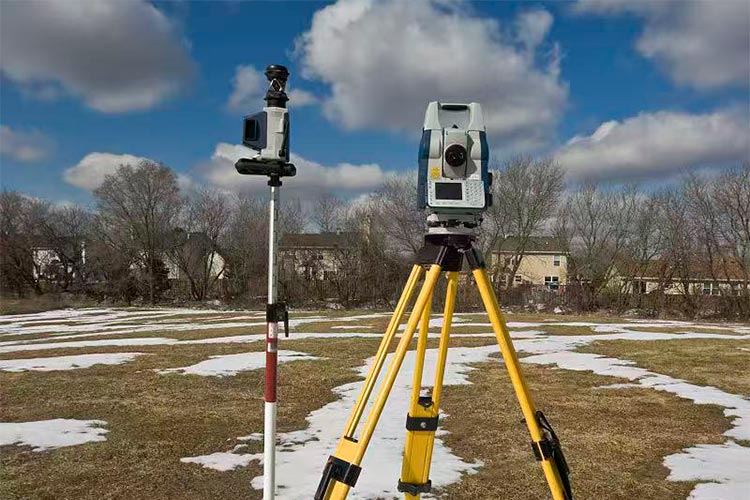
Consider a hypothetical contractor setting out foundation points on a building site.
The surveyor uses a robotic total station and walks between design points with a prism pole and field controller.
With a standard circular prism, the operator may need to rotate the reflector toward the instrument as the working direction changes. Incorrect orientation can make target acquisition less reliable.
With a compatible 360-degree prism, the surveyor can move around the site without repeatedly adjusting the prism's horizontal orientation.
This can make the workflow more convenient, especially when many points must be marked.
However, the surveyor still needs to check the prism constant, pole height, instrument setup and independent control points.
A 360-degree prism improves the tracking workflow; it does not eliminate normal surveying quality-control procedures.
What Should You Check Before Buying?
1. Robotic Total Station Compatibility
Confirm that the reflector works with your instrument's automatic target recognition and tracking functions.
A prism advertised as universally compatible may not provide the same tracking performance with every total station.
2. Prism Constant
Different prism assemblies may require different distance correction settings.
Check the reflector specifications and the instrument manufacturer's convention before entering the prism constant.
For more details, see our Total Station Prism Compatibility Guide.
3. Measurement Accuracy
Compare the reflector's centering accuracy, suitable working range and intended applications.
If your project involves high-precision control or deformation monitoring, evaluate the complete measurement system rather than selecting a prism based only on its 360-degree design.
4. Mounting and Accessories
Confirm the prism's connection to the pole, adapter or mounting assembly.
For procurement teams, it is also worth checking replacement parts, protective cases and consistency between units in a larger order.
Which Prism Should You Choose?
Choose a 360-degree prism when robotic tracking, one-person stakeout and movement around the instrument are central to your workflow.
Choose a standard circular prism when working with conventional total stations or when a carefully aligned reflector is better suited to the required precision.
Some surveying teams benefit from keeping both types available for different tasks.
The best decision should be based on the instrument model, required accuracy and actual field conditions.
Final Thoughts
A 360-degree prism is not a universal replacement for a standard surveying prism.
It offers practical advantages for robotic total station work, while standard circular prisms remain useful for conventional surveying and demanding measurement applications.
RTKSurvey.com supplies multiple types of Surveying Prisms for construction and surveying equipment.
If you are selecting reflectors for a particular total station, confirm the model, prism constant and required accuracy before ordering.