Welcome to RTKSurvey.com

Auto Level vs Digital Level: Which One Should You Choose?
Automatic levels and digital levels are both used to determine height differences in surveying and construction. They serve a similar purpose, but their measurement workflows, data handling and equipment costs are different.
An automatic level requires the operator to read a graduated leveling staff through a telescope. A digital level electronically reads a compatible bar-code staff and can record measurements for further processing.
So which instrument makes more sense for your work: a conventional auto level or a digital level?
The answer depends on the required accuracy, number of observations, field conditions and how your team manages survey data.
1. What Is an Automatic Level?
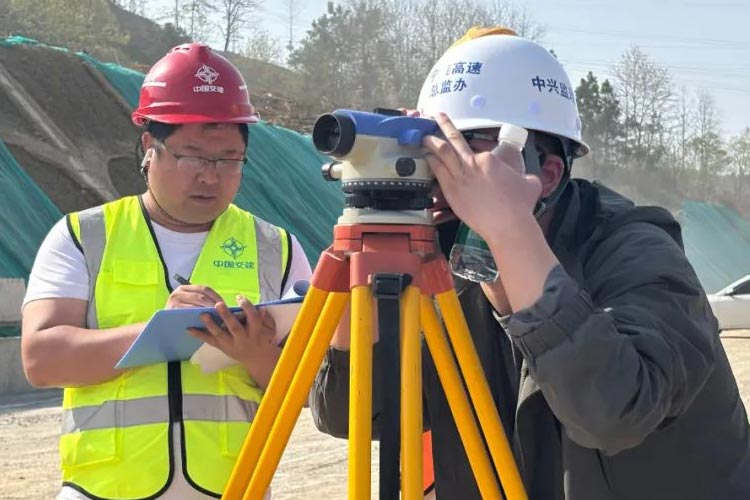
An automatic level, also called an optical automatic level, is used to establish a horizontal line of sight for measuring height differences.
After the instrument is approximately leveled, its internal compensator helps maintain the correct line of sight within the specified operating range.
The surveyor looks through the telescope and reads a graduated leveling staff positioned on the point being measured.
For example, if a backsight reading is 1.425 m and a foresight reading is 1.180 m, the height difference is:
1.425 − 1.180 = +0.245 m
The foresight point is therefore 0.245 m higher than the backsight point, assuming the conventional height-difference calculation.
Automatic levels are commonly used for construction leveling, roadworks, drainage installation and general elevation transfer.
Their main advantages are relatively simple operation, broad availability and lower initial equipment cost.
Explore our Auto Levels category for available models.

2. What Is a Digital Level?
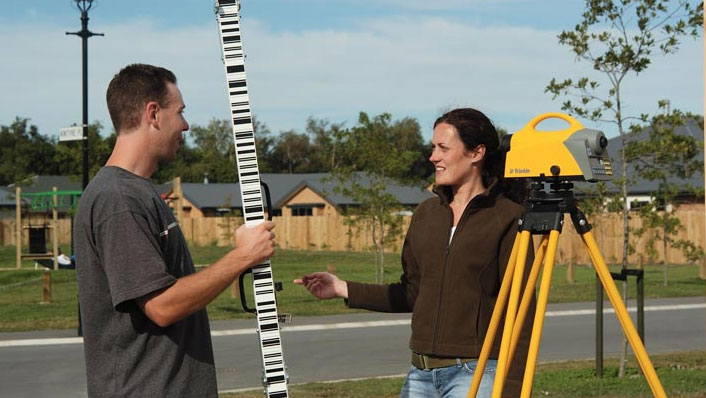
A digital level performs leveling measurements using electronic image processing and a compatible bar-code leveling staff.
Instead of requiring the operator to visually interpret each staff graduation, the instrument reads the coded pattern and calculates the staff reading electronically.
Depending on the model, it can also display or record height differences, estimated sight distances and measurement results.
Digital levels are particularly useful when a project involves repeated observations, precise elevation transfer or structured digital records.
However, a digital level is not simply an automatic level with an electronic display. Its bar-code reading system and data-processing capabilities are central to how it works.
Browse our Digital Levels category to compare available instruments.
3. Auto Level vs Digital Level: Key Differences
| Feature | Automatic Level | Digital Level |
|---|---|---|
| Staff reading | Visual reading through telescope | Electronic reading of compatible bar-code staff |
| Data recording | Usually manual | Electronic recording on many models |
| Calculation | Manual or external software | Built-in calculations on many models |
| Reading errors | More dependent on operator | Reduces manual reading and transcription errors |
| Accuracy | Depends on instrument, staff and method | Depends on instrument, staff and method |
| Power supply | Many optical models operate without batteries | Requires electrical power |
| Initial cost | Generally lower | Generally higher |
| Typical use | General construction leveling | Repetitive, digital and precision leveling workflows |
The biggest practical difference is not that one instrument measures height and the other does something entirely different.
Both measure height differences. The difference lies mainly in how staff readings are obtained, recorded and processed.
4. Is a Digital Level More Accurate Than an Auto Level?
Digital levels can reduce errors associated with manually reading and recording staff values.
However, that does not mean every digital level is more accurate than every optical automatic level.
High-precision optical levels, when used with suitable accessories and procedures, can achieve excellent results.
Similarly, the performance of a digital level depends on the instrument, compatible staff, calibration and measurement conditions.
How Should Buyers Compare Accuracy?
Look for the manufacturer's stated leveling accuracy, often expressed as a standard deviation for a specified leveling procedure over 1 km of double-run leveling.
Also check which staff was used to establish that specification.
A digital level may have different published accuracy values when used with a standard bar-code staff versus a precision Invar bar-code staff.
Do not compare two instruments solely by their display resolution. A smaller displayed increment does not automatically mean higher field accuracy.
5. Which Instrument Is Faster in the Field?
For a small number of simple leveling observations, an experienced crew can work efficiently with an automatic level.
The operator sights the staff, reads the value and records the result.
A digital level becomes especially useful when the crew must collect and document many observations.
Electronic staff reading and automatic recording can reduce repetitive manual work.
Consider a hypothetical road project requiring hundreds of backsight and foresight observations over several days.
With an automatic level, the team may need to manually record readings and later transfer them into a spreadsheet or survey software.
With a suitable digital level, much of the measurement data can be stored directly for subsequent checking and export.
The actual time saved depends on the equipment, field procedure and project requirements.
6. When Should You Choose an Automatic Level?
An automatic level is often a practical choice for:
General construction leveling
Building foundation and floor elevation checks
Drainage and pipeline work
Small or medium-sized engineering projects
Teams that prefer straightforward optical instruments
For these applications, a reliable automatic level with an appropriate leveling staff may be sufficient.
It can also be a sensible option when equipment budget and ease of maintenance are major considerations.
7. When Is a Digital Level Worth the Investment?
A digital level may be more suitable for:
Projects with large numbers of leveling observations
Precise elevation transfer and leveling networks
Settlement and deformation monitoring programs
Engineering projects requiring organized digital records
Survey teams seeking to reduce manual recording work
For example, a monitoring contractor may need to repeat leveling observations along the same route at regular intervals.
A digital level with appropriate software can help organize observations and support consistent data handling.
Nevertheless, precision still depends on correct field procedures, stable benchmarks and suitable environmental conditions.
8. Don't Overlook the Leveling Staff
The leveling staff is part of the measurement system, not an interchangeable accessory.
Most optical automatic levels use conventional graduated staffs.
Digital levels generally require bar-code staffs with patterns compatible with the specific instrument.
For high-precision applications, some digital levels support specialized Invar bar-code staffs.
Before ordering, confirm:
Staff pattern compatibility
Required staff length
Material and thermal stability
Suitability for the accuracy specification
Transport and storage requirements
Using an incompatible staff can prevent a digital level from reading correctly.
Our Essential Surveying Accessories Guide explains additional considerations for leveling staffs, tripods and other field equipment.
9. A Simple Buying Decision
Consider two common purchasing situations.
Buyer A: A construction contractor
The team mainly transfers elevations, checks foundation levels and performs routine site leveling.
The number of observations is manageable, and manual field notes are acceptable.
A good automatic level may provide the required performance without unnecessary cost.
Buyer B: An engineering surveying company
The company conducts long leveling runs, repeated monitoring and projects that require systematic digital measurement records.
A digital level may justify its higher initial cost through improved data handling and a more efficient workflow.
Neither choice is automatically better. The correct decision depends on the work being performed.
Frequently Asked Questions
Is an Auto Level the Same as a Digital Level?
No. Both are used for leveling, but an automatic level normally requires manual staff reading, while a digital level electronically reads a compatible bar-code staff.
Can a Digital Level Work Without a Bar-Code Staff?
Some digital levels support optical viewing or manual reading, depending on the model. However, their electronic bar-code measurement functions generally require a compatible coded staff.
Are Digital Levels Always More Accurate?
No. Accuracy depends on the specific instrument, staff, measurement procedure and field conditions. Compare published leveling accuracy specifications rather than instrument type alone.
Do Automatic Levels Need Batteries?
Many conventional optical automatic levels do not require batteries for normal leveling observations. Digital levels require electrical power for their electronic measurement functions.
Which Level Is Better for Construction?
For routine construction leveling, an automatic level is often economical and sufficient. A digital level may be preferable when the project requires extensive observations, digital records or higher-productivity leveling workflows.
Final Thoughts
The choice between an auto level and a digital level is primarily a question of workflow, measurement requirements and budget.
An automatic level offers a practical solution for everyday construction and general surveying. A digital level adds electronic staff reading, data recording and processing functions that can be valuable for repetitive or precision work.
RTKSurvey.com supplies multi-brand surveying instruments, including automatic and digital levels, for international contractors, surveying companies and equipment distributors.
If you are comparing models for a specific application, contact RTKSurvey.com with your required accuracy, preferred brand, estimated order quantity and destination country to discuss suitable options.