Welcome to RTKSurvey.com

Digital Level Accuracy: 7 Factors That Affect Precise Leveling
A digital level can read a barcode staff automatically and record height observations without manual transcription. This makes digital leveling efficient, but it does not eliminate measurement errors.
For precise elevation surveys, the quality of the results depends on the entire leveling system: the instrument, barcode staff, observation procedure and field conditions.
Understanding the factors that affect digital level accuracy is essential before carrying out benchmark transfers, settlement monitoring or high-precision construction surveys.
Quick Answer: What Affects Digital Level Accuracy?
The seven major factors are:
Instrument collimation and adjustment
Barcode staff condition and calibration
Balanced backsight and foresight distances
Temperature and atmospheric refraction
Staff verticality and turning-point stability
Lighting, vibration and measurement conditions
Leveling route design and closure verification
Even a high-precision digital level can produce unreliable elevations if these factors are not controlled.
1. Instrument Collimation Error
A digital level uses an optical system and compensator to establish a nominally horizontal line of sight.
If the line of sight is not correctly aligned, a collimation error can affect staff readings.
This error becomes particularly important when the backsight and foresight distances are unequal.
For example, consider a setup where the backsight is 20 meters and the foresight is 50 meters.
A small angular collimation error can introduce a systematic difference because the two observations are taken at different distances.
How to reduce the error:
Perform the instrument's recommended collimation check.
Use the manufacturer's specified adjustment procedure.
Check the instrument after a significant impact or suspected misalignment.
Keep backsight and foresight distances balanced.
For precise leveling, follow the applicable survey specification rather than assuming the instrument's automatic compensator eliminates all alignment errors.
2. Barcode Staff Calibration and Condition
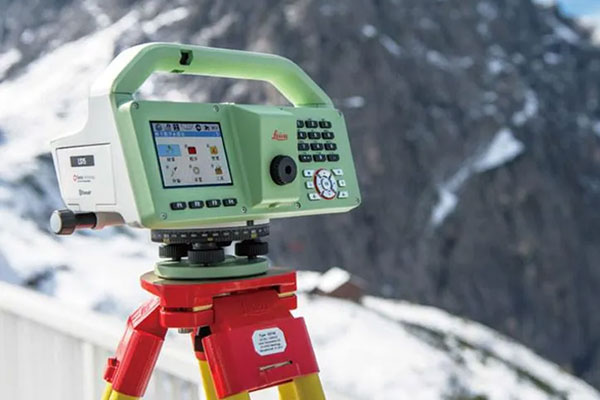
A digital level reads a coded staff using an image-processing system.
The staff is therefore part of the measurement system, not merely an accessory.
A damaged or incorrectly calibrated barcode staff can affect the measured height differences even when the digital level itself is functioning properly.
Common issues include:
Staff scale errors
Loose or damaged staff sections
Dirt or damage on the barcode surface
Temperature-related changes in staff length
Incompatible staff patterns
For high-precision applications, calibrated Invar barcode staffs are often used because of their dimensional stability.
For ordinary construction work, a compatible standard barcode staff may be sufficient, depending on the project's tolerance.
Buying tip: Confirm that the selected barcode staff is compatible with the exact digital level model. Do not assume that barcode staffs from different manufacturers are interchangeable.
Browse our Leveling Staffs for available surveying staff options.
3. Balanced Backsight and Foresight Distances
One of the most important field practices is to keep the backsight and foresight distances approximately equal.
Balanced sight lengths help reduce the effects of collimation error and some systematic atmospheric effects.
Consider two possible setups:
| Setup | Backsight | Foresight | Difference |
|---|---|---|---|
| A | 30 m | 32 m | 2 m |
| B | 15 m | 55 m | 40 m |
All else being equal, Setup A is generally preferable for precise leveling.
However, acceptable sight-length imbalance depends on the required survey accuracy class.
Some high-order leveling specifications impose much stricter limits than routine construction leveling.
Field practice: Use the digital level's displayed distance measurements to monitor backsight and foresight lengths at every setup.
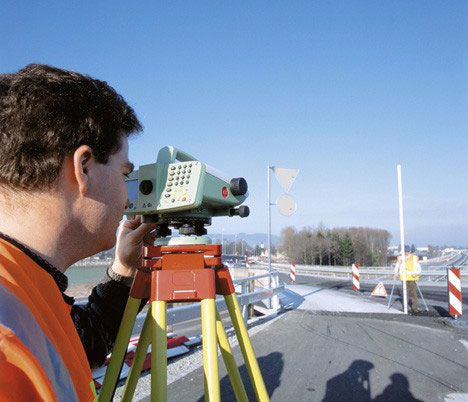
4. Temperature and Atmospheric Refraction
Temperature affects both the instrument and the measurement environment.
Rapid temperature changes can influence instrument stability, while atmospheric temperature gradients can bend the line of sight through refraction.
This is particularly relevant when surveying over hot asphalt, concrete or other surfaces that create strong near-ground temperature gradients.
To reduce environmental effects:
Allow the instrument to acclimatize after moving between very different temperatures.
Avoid unnecessarily long sight distances in unstable atmospheric conditions.
Maintain suitable ground clearance for the line of sight.
Avoid observing directly through strong heat shimmer.
Follow project requirements for temperature observations and corrections.
For precise work, the temperature behavior and calibration of the leveling staff may also need to be considered.
5. Staff Verticality and Turning-Point Stability
The barcode staff must be held vertically and placed on a stable point.
A tilted staff can produce an incorrect reading even when the digital level successfully recognizes the barcode.
For example, a staff reading of 2.000 m tilted by 1 degree can introduce a geometric difference of approximately 0.3 mm, assuming the same point is observed along the inclined staff.
This may be insignificant for some construction tasks but important for precise leveling.
Use the staff bubble or an appropriate support system to maintain verticality.
Turning points also matter.
A poorly placed turning plate on soft ground can settle between backsight and foresight observations, introducing an error that the digital level cannot detect automatically.
Field practice: Select firm turning points, avoid unstable surfaces and use appropriate turning plates or pins.
6. Lighting, Vibration and Measurement Conditions
Digital levels rely on a clear optical image of the barcode staff.
Poor illumination, strong glare or partial obstruction of the barcode can prevent reliable automatic readings.
Vibration from nearby traffic or construction equipment can also disturb the instrument or staff.
Useful precautions include:
Keep the instrument and staff stable during observations.
Avoid direct sunlight entering the telescope when possible.
Ensure the required barcode section is visible.
Keep the optical surfaces and barcode staff clean.
Repeat questionable observations rather than accepting inconsistent results.
A successful digital reading does not automatically confirm that the entire leveling setup is free from error.
7. Leveling Route Design and Closure Verification
A high-precision instrument cannot compensate for a poorly designed leveling route.
Surveyors should plan suitable benchmark connections, observation sequences and independent checks.
For example, a leveling run may start at Benchmark A, transfer elevations through several turning points and finish at Benchmark B.
If both benchmarks have reliable elevations in the same vertical datum, the difference between the observed and known height changes provides a closure check.
For higher-order work, project specifications may require double-run leveling, prescribed observation sequences, maximum sight lengths and additional corrections.
The route should be designed according to the required accuracy rather than simply minimizing the number of instrument setups.
Practical Example: Checking a Leveling Run
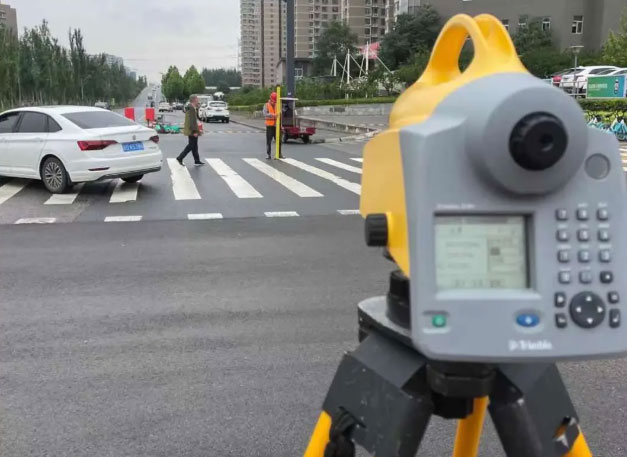
Consider a hypothetical construction project transferring elevation between two established benchmarks.
The accepted benchmark elevations are:
Benchmark A: 100.000 m
Benchmark B: 100.845 m
The known height difference is therefore:
100.845 − 100.000 = +0.845 m
After completing the digital leveling run, the survey crew calculates an observed height difference of +0.849 m.
The closure difference is:
+0.849 − (+0.845) = +0.004 m
The leveling run has a 4 mm closure difference.
Is this acceptable?
That depends on the project specification, the route length, the observation method and the required accuracy class.
A 4 mm closure may be acceptable for one application but unacceptable for a higher-order survey.
The correct response is to compare the result with the specified tolerance, investigate any failure and retain the original observations.
Digital Level Accuracy: What Does mm per Kilometer Mean?
Digital level specifications are often expressed as a standard deviation for a defined leveling procedure over a one-kilometer double run.
For example, a manufacturer may state an accuracy of 0.7 mm per 1 km double run when using a specified barcode staff.
This is a statistical performance specification under defined conditions.
It does not mean that every one-kilometer survey will have exactly 0.7 mm of error, nor does it automatically define the allowable closure for a particular project.
When comparing instruments, check:
| Specification | What to Look For |
|---|---|
| Leveling accuracy | Stated statistical definition and observation method |
| Staff type | Standard barcode or precision Invar staff |
| Measurement range | Minimum and maximum sight distance |
| Measurement time | Speed under suitable field conditions |
| Compensator | Working range and performance |
| Data recording | Internal memory and export options |
| Calibration | Recommended tests and service support |
For a comparison with conventional instruments, read Digital Level vs Auto Level Accuracy.
Field Checklist Before Precise Digital Leveling
| Check | Action |
|---|---|
| Instrument condition | Inspect and perform required collimation checks |
| Barcode staff | Confirm compatibility, cleanliness and calibration |
| Tripod | Check stability and secure mounting |
| Sight lengths | Balance backsight and foresight distances |
| Temperature | Allow instrument acclimatization |
| Turning points | Use stable plates or pins |
| Observations | Follow the required measurement sequence |
| Closure | Compare with the project tolerance |
| Records | Save original observations and field notes |
Frequently Asked Questions
Does a digital level automatically correct every measurement error?
No. Digital reading reduces some human reading and recording errors, but it does not eliminate collimation, staff, atmospheric or setup errors.
Can a digital level use any barcode staff?
No. Barcode recognition systems and staff specifications differ. Compatibility must be confirmed for the particular instrument model.
Is a lower mm/km specification always better?
A lower value indicates better stated performance under the manufacturer's defined conditions, but staff type, field procedures, support and actual application requirements also matter.
How often should a digital level be checked?
Follow the manufacturer's instructions and the applicable project specification. Additional checks are appropriate after shocks, transport incidents or suspicious results.
Final Thoughts
Digital level accuracy depends on more than the instrument's published specification.
Reliable height measurements require a properly adjusted digital level, compatible and well-maintained barcode staffs, balanced sight distances and a suitable observation procedure.
For precise work, independent checks and documented closure results are essential.
RTKSurvey.com supplies Digital Levels and related Leveling Staffs from multiple brands for surveying and engineering applications.